Merhamet Apartments
The Museum of InnocenceThe Merhamet Apartments is a flat belonging to Kemal Basmacı’s mother at 131 Teşvikiye Avenue, in Istanbul. For Kemal it changes from a familiar place to study and work into a refuge shaped by his love for Füsun, then a private archive where objects stand in for lost time. Its rooms gather the novel’s movement from ordinary routine to absence, compulsive remembrance, and the eventual public display of a private past.
Setting and Earlier Use
Before going to America, Kemal used the apartment as a hideout where he studied and listened to music. He describes it as looking onto a garden at the back. Later, even while occupied with his office work, he continued to go there every lunchtime, between two and four, and shut himself in to catch up on paperwork. The apartment was therefore already built into his daily life before it became closely associated with Füsun: it offered privacy within the city and a regular interval set apart from his other responsibilities.
That habitual use gives the place a double character. It is connected to family through his mother’s ownership, but Kemal treats it as a retreat of his own. When Füsun becomes part of its history, the rooms do not lose their earlier associations; instead, her presence accumulates among the apartment’s existing furnishings and memories. The space can hold office papers, old family belongings, and traces of a secret relationship without those uses resolving into a single purpose.
The Apartment as a Meeting Place
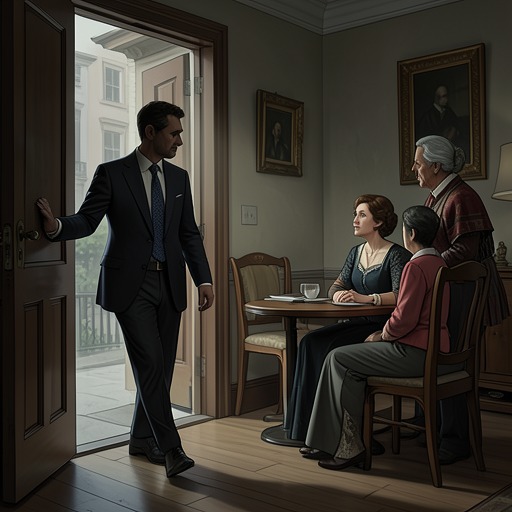
In 1975 the apartment becomes the setting for Kemal’s meetings with Füsun. On Wednesday, April 30, he waits there for her between two and four in the afternoon, but she does not arrive. He returns the following day, again without seeing her. In the empty rooms, his attention turns to his mother’s old vases and dresses, discarded furniture, and his father’s amateur photographs. Looking through the photographs brings back parts of his childhood and youth that he had not known he had forgotten. Even at the beginning of his distress, then, the apartment’s objects offer a kind of relief: the room’s contents connect present disappointment with a longer personal past.
Füsun does come to the apartment on a later occasion, ringing the bell after Kemal has been there for twenty minutes. He recalls that he had opened the door to her in a dream the night before. The threshold becomes part of the place’s emotional pattern: waiting may end in a meeting, but the uncertainty of whether she will appear continues to shape his experience of the rooms. During their relationship they meet there regularly, often for at least two hours a day. As the day of Kemal’s engagement party approaches, the silences between them grow longer even though they continue to meet. The apartment holds both the closeness of their private time and the strain that begins to enter it.
Kemal later identifies an intimate encounter with Füsun there as the happiest moment of his life. His account of that moment is retrospective: to call one instant the happiest is also to recognize that it belongs to the past and cannot return. He links this awareness to the need to keep something from the moment, because mementos preserve its particulars more faithfully than memory alone. The apartment is thus not merely where the relationship happens; it becomes the place through which Kemal understands the relation between happiness, recollection, and loss.
Waiting, Absence, and Objects
When Füsun stops coming, Kemal continues to wait at the apartment. In June he stays two hours beyond their usual meeting time, then leaves, only to return in the hope that she will come the next day. She does not appear the next day or during the four days that follow. He keeps visiting every afternoon at two o’clock until the middle of July. Although he sometimes tells himself that he is becoming accustomed to her absence, he recognizes that his pain is not diminishing. The repeated visit preserves both a routine and the possibility, however uncertain, of seeing her again.
The apartment’s furnishings become part of how he endures that waiting. Kemal returns to the bed and handles objects Füsun had touched, seeking comfort in their physical presence. One is a glass paperweight he had given her on June 2, which she had left behind rather than take home. He recalls relief from holding it and trying to recover the trace of her hands. He also handles a paint-splattered brush, moving it over his skin and to his mouth, and recognizes that the objects are becoming a habit on which he depends. They ease his distress temporarily, but do not help him forget Füsun. Their comfort is therefore inseparable from the absence they recall.
Other objects deepen the apartment’s role as an archive. After Kemal’s father dies, he seeks refuge there, taking Füsun’s lead pencil and a teacup that he has not washed since her disappearance into bed with him. He has learned that the pencil brings him the greatest comfort and the cup comes next. The episode echoes the earlier loss: the family home and its belongings make his father’s death immediate, while the objects at the apartment help him recover enough calm to face it. Across these different forms of grief, familiar things become vessels of a past that cannot be restored by possessing them.
A Private Map and a Growing Collection
Kemal’s attachment to the apartment extends into his use of the surrounding city. At one point he tries to stop himself from going there, waiting for Füsun, or touching reminders of her. To enforce the prohibition, he draws a modified map of Nişantaşı and marks certain places in red as forbidden. The Merhamet Apartments on Teşvikiye Avenue appears among them, alongside the Şanzelize Boutique, a police station, and the corner where Alaaddin had his shop. He also bans Kuyulu Bostan Street, where Füsun and her family live, as well as nearby streets and side roads. The map turns emotional avoidance into a practical system of routes and boundaries, though his attempts to control where memory can reach him do not make the city neutral.
In fact, Istanbul increasingly becomes a network of reminders. Kemal begins frequenting crowded places where he might glimpse what he calls Füsun’s ghost, and he marks those locations on his mental map too. His search takes him through neighborhoods including Vefa, Zeyrek, Fatih, and Kocamustafapaşa. The Merhamet Apartments remains the counterpoint to this outward wandering: the city supplies possible sightings, while the apartment gives him a place to return to and handle what he has kept. Later, a small object taken from the Keskin family home—a thimble, button, or spool—can help him prolong the happiness of an evening there. The apartment’s collection and his city routes thus become linked practices of remembering.
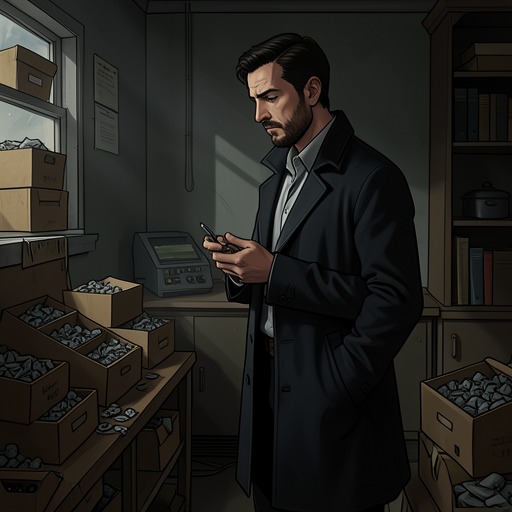
Kemal’s collection grows from objects associated with his time with Füsun and, later, from belongings he takes from the Keskin household. He replaces some of the family’s things with more valuable items, but the practice remains unspoken within the household. At the Merhamet Apartments, he reflects on the accumulating collection, sometimes viewing its contents as mementos of happy hours and sometimes as the tangible debris of his inner turmoil. He worries that the things might fill the rooms from floor to ceiling. What began as solace is becoming an organized, growing presence in the place, one that makes visible the intensity of his attachment as well as the difficulty of leaving the past behind.
The meaning of the objects changes over time. At first Kemal needs to pick them up and touch them; later, he says that seeing them is enough to recall shared evenings at the dinner table. A porcelain saltshaker, a dog-shaped tape measure, a can opener, and a bottle of Batanay sunflower oil each call up a particular moment. As those moments expand and merge in memory, looking at the objects gathered in the apartment becomes a way of recalling the whole experience of sitting with Füsun and her family. The collection does not simply preserve isolated souvenirs: in Kemal’s account, each item can open onto the repeated life around it.
From Retreat to Museum and Memorial
After leaving the hospital, Kemal returns to the apartment to sit on the bed, smoke, and look at the surrounding objects. He comes to feel that telling his story might ease his pain, but understands that doing so would require bringing the collection into the open. He also realizes that he needs a place to gather the things connecting him to Füsun, from those first acquired impulsively to items later retrieved from her room. His visits to smaller museums around the world help him imagine what such a place might mean. The apartment is the starting point of this transition: what had been a secluded private store of memories becomes the basis for a museum intended to make them visible.
The apartment’s later significance is not limited to Kemal’s years of waiting. On a night walk with Orhan Pamuk, he stops in front of it, five buildings short of the Pamuk Apartments. He speaks with the narrator about the ending of the book and about addressing its reader directly. Then he takes Füsun’s photograph from his pocket and looks at it beneath the streetlamp. The apartment is once again the site of a threshold moment, but now the remembered relationship is being shaped into a story for others. The photograph, rather than an object kept inside the apartment, carries the past into the street and into the narrative.
Across these episodes, the Merhamet Apartments changes from a convenient place for study and lunchtime paperwork into the private geography of Kemal’s love and grief. Its repeated hours, empty bed, remembered furnishings, and growing collection give physical form to his effort to remain close to Füsun. Its eventual relation to the Museum of Innocence follows from that history: the museum makes public what the apartment had held privately, while the apartment remains the place where Kemal’s attachments first took material shape.